General Orthopaedic Specialist in Bangalore
Orthopaedic problems can affect bones, joints, muscles, ligaments, tendons and nerves. Pain or stiffness may begin after an injury, develop gradually because of repeated strain or appear due to arthritis and age-related changes.
Dr Samarth Arya provides assessment and treatment for a broad range of bone, joint and musculoskeletal conditions in Bangalore. Care is planned according to the diagnosis, symptom severity, daily activities, occupation, sports requirements and overall health.
Consider an orthopaedic consultation when pain continues despite rest, swelling repeatedly returns, movement becomes restricted, weakness affects daily activities or an injury makes walking, lifting or using a limb difficult.
When Should You Seek Medical Attention?
Seek prompt medical assessment after a significant fall, road accident or sports injury; when pain is severe; when a joint appears deformed; or when you cannot place weight on a limb or use it normally.
Urgent care is required for an open injury, loss of sensation, a cold or pale limb, rapidly increasing swelling, severe pain with deformity, fever with a hot swollen joint or new weakness following an injury.
Conditions Treated in General Orthopaedics
Joint Pain and Arthritis
Arthritis can affect the knee, hip, shoulder, ankle, elbow, wrist and other joints. Symptoms may include pain, swelling, stiffness, grinding and reduced movement.
Fractures and Trauma
Fractures may occur after falls, road accidents, workplace incidents or sports injuries. Treatment depends on the bone involved, alignment, stability, soft-tissue injury and joint involvement.
Sprains and Ligament Injuries
Ligaments support and stabilise joints. Sprains range from mild stretching to complete tears and may affect the ankle, knee, shoulder, wrist or other joints.
Muscle and Tendon Problems
Repeated strain, sudden overload and age-related changes can cause tendon irritation or tearing. Common examples include rotator cuff problems, Achilles tendon conditions and tennis elbow.
Sports Injuries
Sports injuries may involve cartilage, ligaments, muscles, tendons or bones. Accurate diagnosis and structured rehabilitation help patients return to activity safely.
Back and Neck-Related Musculoskeletal Pain
Some back and neck symptoms arise from muscle strain, posture, joint changes or nerve irritation. Assessment helps identify whether treatment, imaging or referral is required.
Foot and Ankle Conditions
Heel pain, ankle sprains, instability, tendon problems, flatfoot, bunions and arthritis can affect walking, balance and daily mobility.
Shoulder and Elbow Conditions
Rotator cuff problems, frozen shoulder, instability, tennis elbow, fractures and nerve compression can interfere with lifting, reaching, gripping and sleep.
Knee and Hip Conditions
Arthritis, meniscus injuries, ligament problems, bursitis, tendon pain and fractures may cause pain, stiffness and reduced mobility.
How Orthopaedic Conditions Are Diagnosed
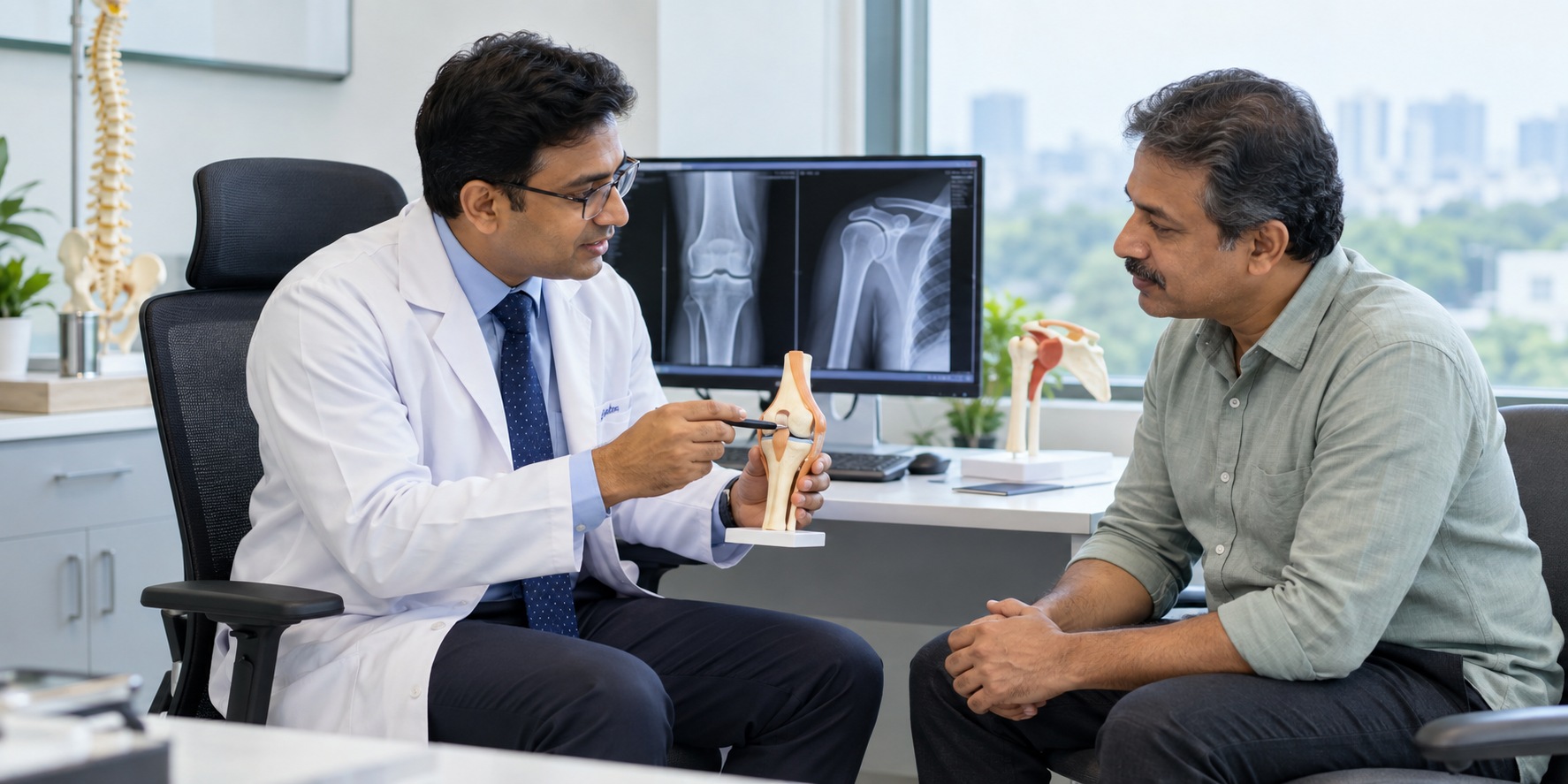
Assessment begins with a detailed discussion of symptoms, previous injuries, medical conditions, occupation, activity level and treatment already attempted. The clinical examination may evaluate swelling, tenderness, movement, strength, stability, alignment, walking pattern and nerve function.
Investigations may include:
- X-rays
- Ultrasound examination
- MRI scan
- CT scan
- Blood tests
- Nerve-conduction studies
- Bone-density testing in selected patients
Not every patient requires every test. Investigations are selected according to the clinical findings and suspected diagnosis.
Non-Surgical Orthopaedic Treatment
Many orthopaedic conditions can initially be treated without surgery. Depending on the diagnosis, care may include:
- Activity modification
- Rest, ice, compression and elevation after selected acute injuries
- Medicines for pain and inflammation when appropriate
- Physiotherapy and guided exercises
- Mobility, flexibility and strengthening programmes
- Posture, workplace and sports-technique modification
- Braces, supports, splints, casts or walking boots
- Weight-management guidance
- Selected injections after clinical assessment
The objective is to relieve symptoms, restore useful movement and strength, and reduce the risk of recurring problems.
When Is Orthopaedic Surgery Considered?
Surgery may be considered when there is a displaced or unstable fracture, significant ligament or tendon injury, recurrent instability, nerve compression, advanced arthritis or continuing symptoms despite suitable non-surgical treatment.
Depending on the condition, treatment may involve:
- Fracture fixation
- Arthroscopy
- Ligament or tendon repair and reconstruction
- Nerve decompression
- Correction of selected deformities
- Joint preservation procedures
- Joint replacement for selected advanced arthritis
- Other reconstruction according to the diagnosis
The recommended procedure depends on the condition, imaging findings, functional needs and expected benefits and limitations.
Recovery and Rehabilitation
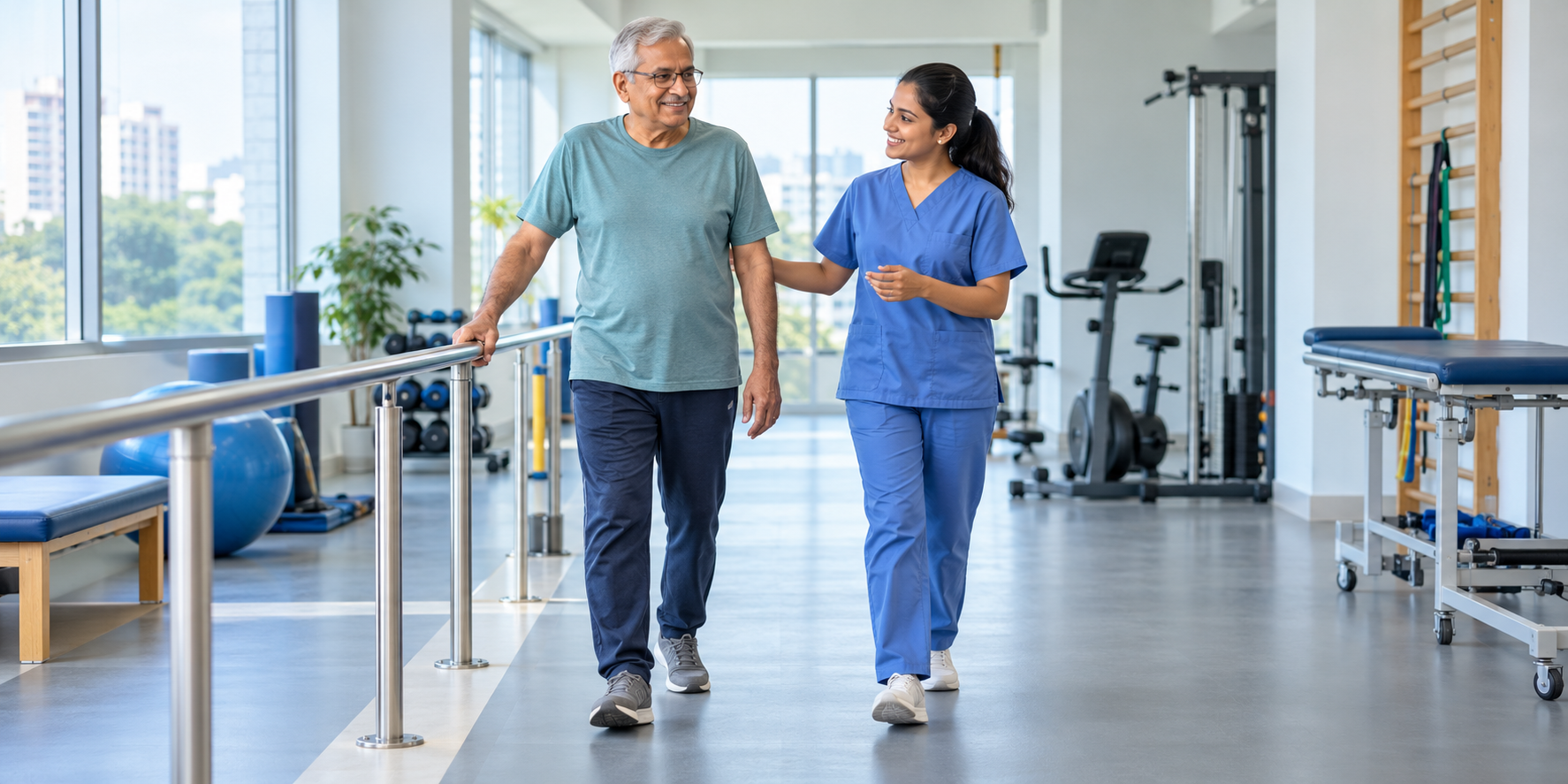
Recovery varies according to the condition and treatment. Rehabilitation may include pain and swelling control, protected movement, gradual weight bearing, mobility exercises, strengthening, balance training and a progressive return to work, driving, exercise or sport.
Follow-up helps monitor healing, movement, strength and function. Imaging may be repeated when clinically required.
Your Orthopaedic Care Journey
1. Consultation
Symptoms, medical history, previous injuries and activity requirements are reviewed.
2. Clinical Examination
The affected area is assessed for tenderness, swelling, movement, alignment, strength and stability.
3. Diagnosis
Suitable imaging or laboratory tests are selected when required.
4. Treatment Planning
Non-surgical options and surgery, when relevant, are explained along with expected recovery.
5. Treatment
The selected treatment is provided according to the diagnosis and individual needs.
6. Rehabilitation
Movement, strength and function are progressed safely according to healing.
7. Follow-Up
Clinical review and imaging, when needed, help monitor progress.
Why Choose Dr Samarth Arya for General Orthopaedic Care?
- Assessment of common and complex bone and joint conditions
- Management of fractures, arthritis, sports injuries and soft-tissue problems
- Individualised surgical and non-surgical treatment planning
- Attention to pain relief, movement, strength and stability
- Structured rehabilitation and follow-up
- Coordination with imaging, medical and physiotherapy teams
- Consultation at Manipal Hospital, Old Airport Road, Bengaluru
General Orthopaedic Care at Manipal Hospital, Old Airport Road
Patients undergoing evaluation and treatment at Manipal Hospital, Old Airport Road, Bengaluru, have access to coordinated orthopaedic care, imaging services, surgical facilities and rehabilitation support.
The care pathway may involve orthopaedic assessment, diagnostic imaging, anaesthesia evaluation, surgery when required, physiotherapy and follow-up according to individual needs.
Care location: Manipal Hospital, Old Airport Road, Bengaluru
Frequently Asked Questions
Consult a specialist when pain persists, swelling repeatedly returns, movement becomes restricted, weakness affects daily activities or symptoms follow an injury.
No. Many conditions can be assessed through history, examination and X-rays. MRI or other tests are advised only when clinically useful.
Many patients are initially treated with activity modification, physiotherapy, medicines, weight management and selected injections. Surgery is considered according to symptoms and severity.
Surgery may be required when a fracture is displaced, unstable, involves a joint or cannot be maintained in a suitable position without fixation.
Recovery depends on the condition, treatment, age, general health and rehabilitation. Your doctor can provide a more specific estimate after evaluation.
Physiotherapy can help improve movement, strength, balance and function in many conditions. The programme should be based on the diagnosis.
The timing depends on healing, movement, strength and the demands of the activity. Return should be gradual and guided by clinical progress.
Seek urgent care for an open injury, obvious deformity, loss of sensation, a cold or pale limb, rapidly increasing swelling, severe pain after significant trauma or fever with a hot swollen joint.
Individual treatment and recovery vary. This information is for general educational purposes and does not replace consultation with a qualified medical professional.
Our Services
Get In Touch With Us
service timing ( Mon to Sat )
10 Am To 9 Pm