Comprehensive Sports Injury Care in Bangalore
Sports injuries can affect professional athletes, recreational players, fitness enthusiasts and anyone maintaining an active lifestyle. An injury may occur suddenly during training or competition, or develop gradually because of repeated stress, poor movement patterns or inadequate recovery.
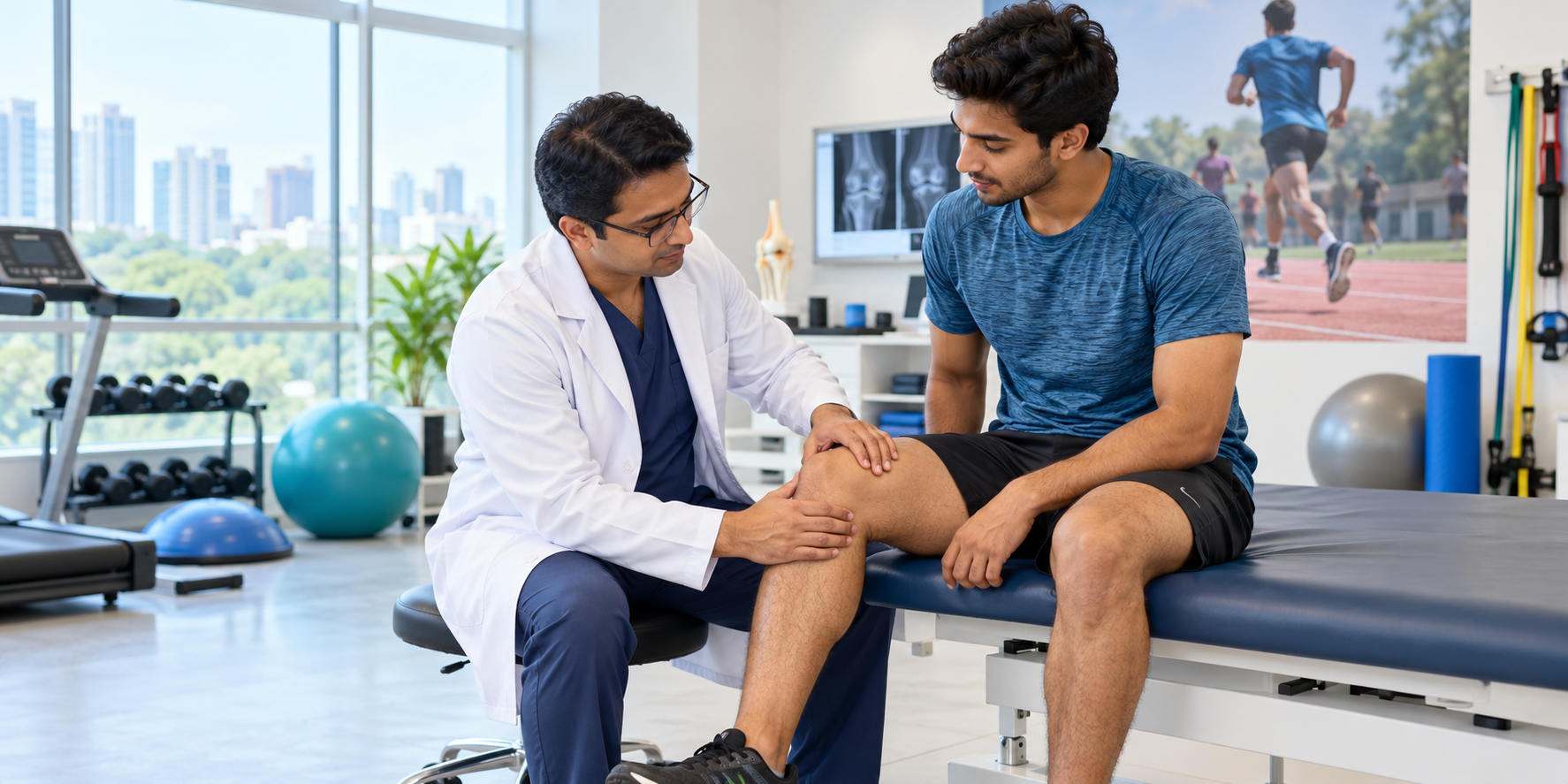
Dr Samarth Arya provides sports injury evaluation and treatment in Bangalore for conditions affecting the knee, shoulder, elbow, hip, ankle and other joints. Treatment may include activity modification, physiotherapy, bracing, medication, rehabilitation, arthroscopy, ligament reconstruction or cartilage procedures.
The objective is not simply to reduce pain. It is to restore movement, strength and joint stability while helping each patient return safely to work, exercise or sport.
When Should You Consult a Sports Injury Specialist?
Minor soreness after physical activity may improve with rest. However, persistent or worsening symptoms require proper assessment to prevent further injury.
- Pain that continues or returns during activity
- Swelling after training, exercise or sport
- Difficulty bearing weight on the injured limb
- Joint locking, catching or painful clicking
- A feeling that the knee, shoulder or ankle is giving way
- Reduced movement or strength
- Pain after twisting, landing, falling or direct impact
- A popping sensation at the time of injury
- Recurrent sprains or joint dislocations
- Inability to return to your previous level of activity
Severe pain, visible deformity, inability to bear weight, loss of sensation, a cold or pale limb, or suspected fracture or dislocation requires prompt medical assessment.
Sports Injuries We Treat
ACL and Knee Ligament Injuries
The anterior cruciate ligament helps control knee stability during turning, landing and sudden changes of direction. ACL injuries frequently occur during football, badminton, basketball and similar activities.
Symptoms may include a popping sensation, swelling, pain and a feeling that the knee is giving way. Treatment may involve structured rehabilitation or ACL reconstruction depending on knee stability, associated injuries and activity expectations.
Meniscus Tears
The meniscus acts as a shock absorber inside the knee. It can tear during twisting movements, deep squatting or direct impact.
Symptoms may include joint-line pain, swelling, catching, locking or difficulty fully bending and straightening the knee. Some tears can be managed through rehabilitation, while selected tears may require meniscus repair or arthroscopic treatment.
Cartilage Injuries
Joint cartilage can be damaged during twisting injuries, dislocations or repeated impact. Treatment depends on the size and location of the defect, bone alignment, ligament stability and activity requirements.
Patellofemoral Pain
Pain around or behind the kneecap is common among runners, cyclists, gym users and individuals involved in jumping activities. Treatment usually begins with rehabilitation, activity modification and correction of contributing factors.
Shoulder Dislocation and Instability
A shoulder dislocation can occur after a fall, collision or forceful overhead movement. Some patients subsequently experience repeated dislocations or a feeling that the shoulder is slipping out.
Rotator Cuff Injuries
The rotator cuff helps move and stabilise the shoulder. Injury may result from a fall, forceful movement or repetitive overhead activity. Symptoms may include pain while lifting the arm, weakness and night pain.
Shoulder Labral Injuries
The labrum supports shoulder stability. Labral injuries may occur during dislocation, throwing, weightlifting or direct impact.
Tennis and Golfer’s Elbow
Repetitive gripping, lifting, racquet sports and gym exercises can irritate the tendons around the elbow. These conditions also affect people who do not play tennis or golf.
Ankle Sprains and Instability
An ankle sprain occurs when supporting ligaments are stretched or torn. Repeated sprains can lead to chronic instability, weakness and reduced confidence during activity.
Muscle, Tendon and Stress Injuries
Muscle strains and tendon injuries can affect the hamstring, quadriceps, calf, Achilles tendon, groin, shoulder or elbow. Stress fractures are overuse injuries caused by repeated loading of bone and require timely assessment.
How Sports Injuries Are Diagnosed
A detailed diagnosis helps identify the injured structure and factors that may have contributed to the problem.
The consultation may include:
- Discussion of how and when the injury occurred
- Review of sport, training routine and previous injuries
- Assessment of swelling, tenderness and joint movement
- Evaluation of muscle strength and joint stability
- Observation of walking, running or relevant movement patterns
- X-rays when fracture or bone injury is suspected
- MRI for selected ligament, meniscus, cartilage, muscle or tendon injuries
- Ultrasound for certain superficial tendon or muscle conditions
- CT scanning when detailed assessment of bone is required
Not every sports injury requires an MRI. Imaging is recommended according to symptoms, examination findings and the suspected diagnosis.
Non-Surgical Sports Injury Treatment
Many sports injuries can initially be treated without surgery. The treatment plan may include:
- Temporary rest or modification of painful activities
- Protection with a brace, splint or support
- Ice and swelling-control measures when appropriate
- Pain-relieving or anti-inflammatory medication
- Physiotherapy and progressive strengthening
- Flexibility and mobility exercises
- Balance and proprioception training
- Correction of movement and training errors
- A gradual return-to-running or sport programme
- Selected injections when clinically appropriate
Complete inactivity is not necessary for every injury. Rehabilitation should progressively restore movement, strength and control without exposing the injured tissue to excessive stress.
Injection treatment is not suitable for every sports injury. Its potential benefits, limitations and alternatives should be discussed before proceeding.
Arthroscopy and Sports Injury Surgery
Surgery may be considered when an injury causes persistent instability, mechanical symptoms, significant tissue damage or inadequate improvement after appropriate rehabilitation.
Depending on the diagnosis, procedures may include:
- Knee arthroscopy
- ACL or PCL reconstruction
- Multiligament knee reconstruction
- Meniscus repair
- Treatment of selected cartilage injuries
- Arthroscopic shoulder stabilisation
- Rotator cuff repair
- Shoulder labral repair
- Treatment of recurrent kneecap instability
- Ankle ligament reconstruction
- Repair of selected tendon ruptures
- Revision surgery after a failed ligament procedure
Arthroscopy uses a small camera and specialised instruments to examine and treat selected problems inside a joint. It is not required for every sports injury and should be recommended only when clinically appropriate.
Rehabilitation and Return to Sport
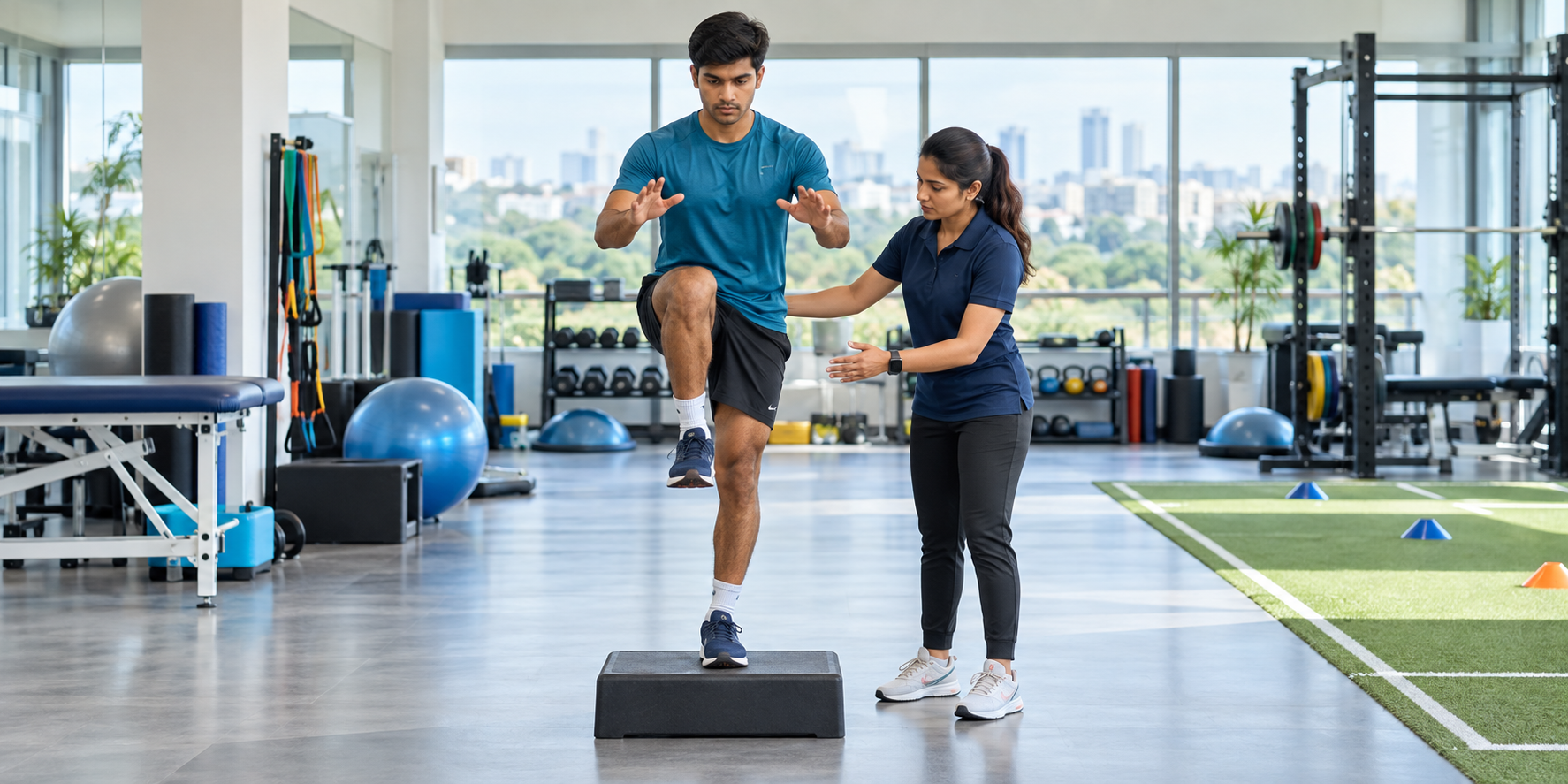
Returning to sport is based on recovery of function rather than a fixed number of weeks or months. Rehabilitation may include restoring movement, rebuilding strength, improving balance, sport-specific drills and gradual return-to-training progression.
A patient may feel better before the injured tissue has recovered sufficient strength and control. Returning too early can increase the risk of reinjury.
Your Sports Injury Care Journey
1. Consultation and Injury Assessment
The process begins with understanding how the injury occurred, the activities affected and any previous treatment.
2. Diagnosis
Clinical examination and appropriate investigations help identify the injured structure and severity of damage.
3. Personalised Treatment Plan
Non-surgical and surgical options are explained according to the injury, activity level and recovery goals.
4. Rehabilitation
A progressive programme helps restore movement, strength, balance and joint control.
5. Surgery When Required
If surgery is appropriate, the procedure, possible risks, alternatives and rehabilitation requirements are explained beforehand.
6. Return-to-Activity Progression
Training and activity are gradually reintroduced according to symptoms, healing and functional assessment.
7. Follow-Up and Injury Prevention
Follow-up reviews help monitor progress and address strength, movement or training factors that may increase reinjury risk.
Why Choose Dr Samarth Arya for Sports Injury Care?
- Detailed assessment before recommending treatment
- Management of knee, shoulder, elbow, hip and ankle injuries
- Consideration of non-surgical treatment before surgery
- Experience in arthroscopy and ligament reconstruction
- Meniscus and cartilage-preservation approach where appropriate
- Treatment planning based on activity and sporting requirements
- Coordination with physiotherapy and rehabilitation teams
- Structured postoperative follow-up
- Guidance for safe return to exercise and sport
- Consultation at Manipal Hospital, Old Airport Road, Bengaluru
Sports Orthopaedics at Manipal Hospital, Old Airport Road
Patients undergoing sports injury evaluation and treatment at Manipal Hospital, Old Airport Road, Bengaluru, have access to coordinated orthopaedic assessment, diagnostic imaging, surgical facilities and rehabilitation support.
Care may involve orthopaedic evaluation, imaging, physiotherapy, bracing, arthroscopy, ligament reconstruction and postoperative rehabilitation according to the patient’s injury and functional requirements.
Care location: Manipal Hospital, Old Airport Road, Bengaluru
Frequently Asked Questions
No. Sports orthopaedics also treats injuries affecting recreational players, gym users, runners, fitness enthusiasts and active individuals.
You may need to temporarily stop or modify activities that worsen the injury. Complete inactivity is not required for every condition.
No. Some patients may manage with structured rehabilitation. Surgery is more commonly considered when knee instability continues or the patient wants to return to pivoting sports or demanding activities.
Some meniscus tears can improve with rehabilitation, while others may require repair or arthroscopic treatment.
MRI may be recommended when ligament, meniscus, cartilage, muscle or tendon damage is suspected. Not every injury requires an MRI.
Arthroscopy is a minimally invasive procedure that uses a small camera and instruments to examine and treat selected problems inside a joint.
No. Many sports injuries improve with physiotherapy, activity modification, bracing and progressive rehabilitation.
Recovery depends on injury severity, associated damage, treatment selected, muscle strength and rehabilitation progress.
Return to sport depends on healing, movement, strength, balance, joint stability and sport-specific testing. It should not be based only on time since surgery.
Not every injury can be prevented. Appropriate warm-up, strength training, gradual progression, recovery, suitable equipment and attention to technique may help reduce risk.
Stop the activity and protect the injured area. Seek medical assessment for severe pain, swelling, deformity, inability to bear weight, numbness or suspected fracture.
You can submit the enquiry form on this page to request an appointment for sports injury evaluation and treatment in Bangalore.
Individual treatment results and recovery experiences vary. This information is educational and does not replace consultation with a qualified medical professional.
Our Services
Get In Touch With Us
service timing ( Mon to Sat )
10 Am To 9 Pm